


[2024 Labour Holidays] Can't tell a public holiday from a statutory holiday? Employers should pay attention: There are new statutory holidays this year.
According to the Employment Ordinance, the number of statutory holidays will be increased to 17 in the future, and an additional day will be added in 2024. As an employer, you should be aware of the difference between labour holidays and public holidays in order to make better arrangements for the current year's work and avoid violating the Employment Ordinance. This article will help you to know more about them.
Difference between labour holidays and general holidays
If you are a wage earner, of course you would like to get a "bank holiday" job, but if you are an employer, especially during the start-up period, it would be nice to have a "red day" off!
Different people at different stages of life have different expectations of holidays. But what are "bank holidays" and "red days"? What are labour holidays and public holidays?
statutory holidays
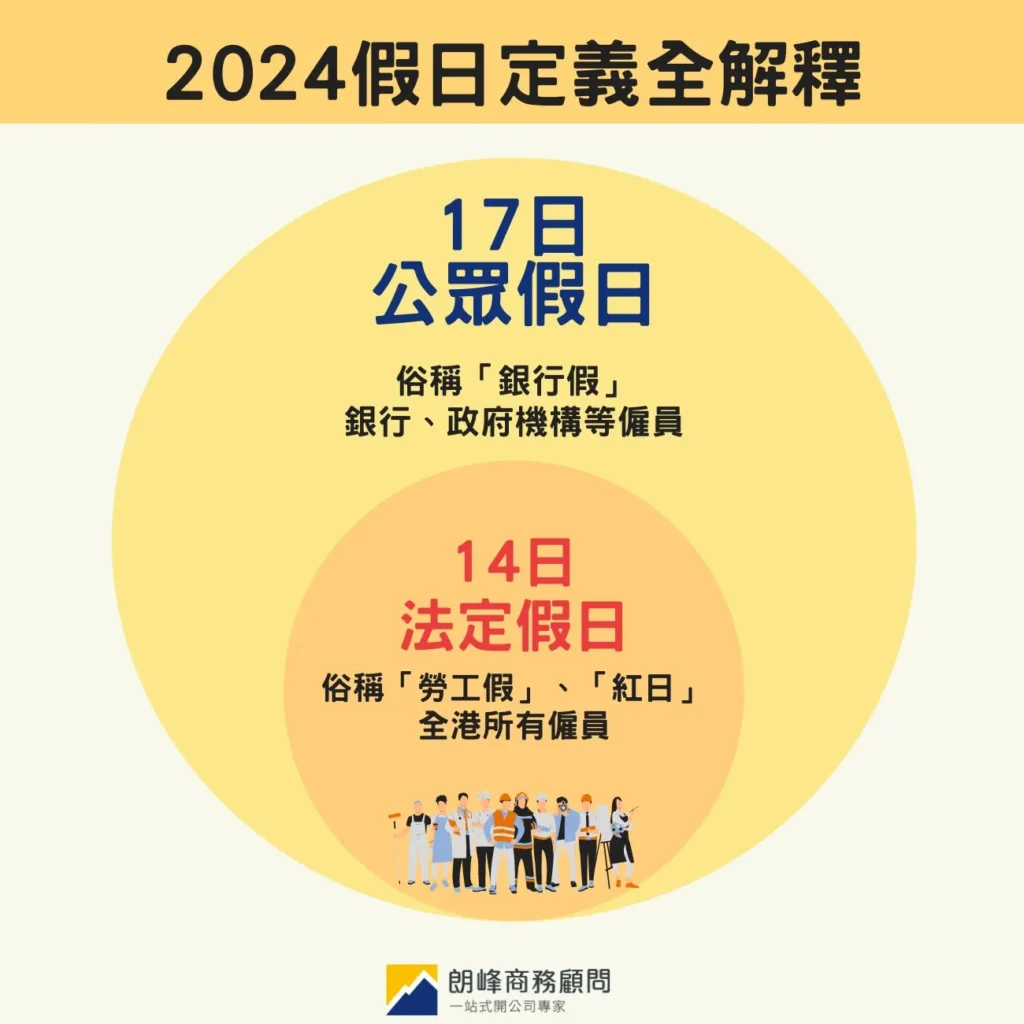
Statutory Holiday is a labour holiday, which is often referred to as "Red Day" or "Labour Holiday". According to the Employment Ordinance, all employees are entitled to 12 statutory holidays per year. Statutory holidays are also applicable to employees irrespective of their length of service or whether they are employed under a "continuous contract", as well as foreign domestic helpers.
Employers need to be aware that there will be an additional 14 statutory holidays in Hong Kong in 2024, mainly due to the addition of Boxing Day, the first Sunday after Christmas, which will fall on 26 December 2024 accordingly.
Public Holidays
General Holiday (GH) is a holiday that is granted under theGeneral Holidays OrdinanceIt is stipulated that employees are entitled to 17 days of holiday per year, and the employees stipulated here refer to those working in banks, educational institutions, public sector offices and government departments, so we will also refer to them as "bank holidays".
At present, there are 17 general holidays in Hong Kong, which are more than the number of statutory holidays. It should be noted that the law also stipulates that every Sunday is a public holiday.
Increase in the number of statutory holidays in Hong Kong to 17
The Employment (Amendment) Bill 2021 was read the third time and passed by the Legislative Council, under which the number of statutory holidays will be gradually increased from 12 to 17, with one additional statutory holiday to be added every two years. The additional statutory holidays will be those among general holidays which are not yet statutory holidays, i.e. from 2030 onwards, the number of statutory holidays and general holidays will be the same at 17 days.
Phased Approach
| commencement date | statutory holidays |
|---|---|
| 2022/1/1 | Buddha's Birthday |
| 2024/1/1 | First Sunday after Christmas (Boxing Day) |
| 2026/1/1 | Easter Monday |
| 2028/1/1 | Good Friday |
| 2030/1/1 | The day following Good Friday |
Table of 14 statutory holidays (labour holidays) in 2024
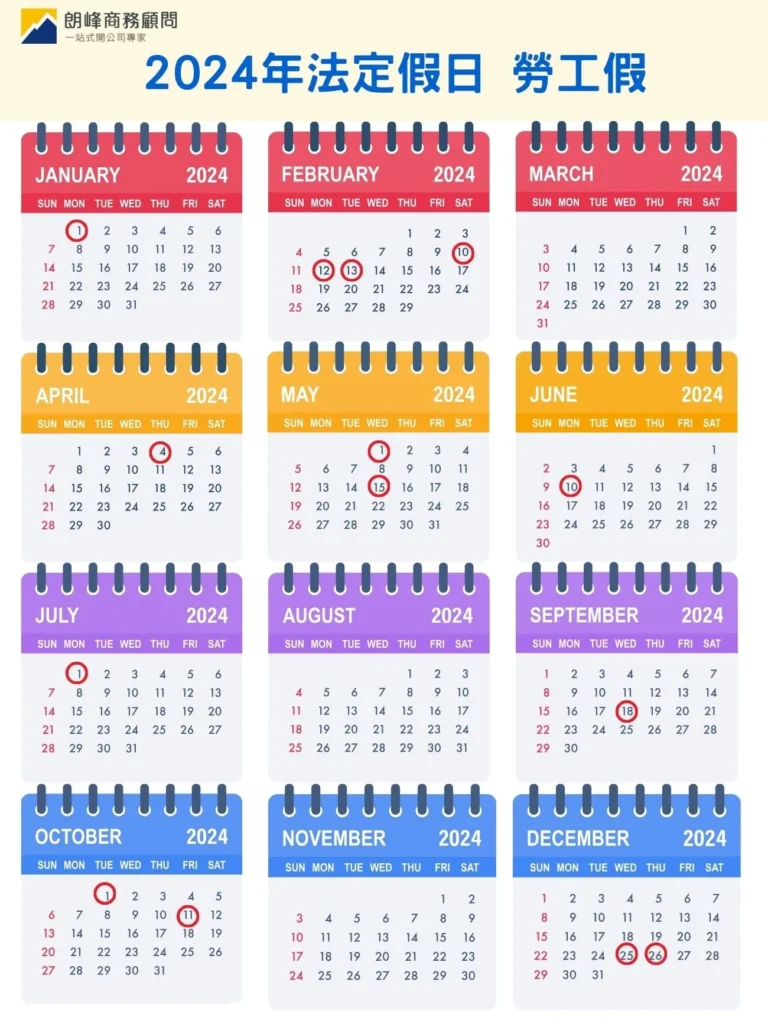
| statutory holidays | dates |
|---|---|
| 1 January | 1 January (i) |
| Lunar New Year's Day | 10 February (Sat) |
| The third day of the Lunar New Year | 12 February (i) |
| The fourth day of the Lunar New Year* | 13th February (Tue) |
| Qingming or Pure Brightness Festival or Tomb Sweeping Day (in early April) | 4 April (Thu) |
| Labour Day | 1 May (Wed) |
| Buddha's Birthday | 15 May (Wed) |
| Dragon Boat Festival (5th day of the 5th lunar month) | 10 June (I) |
| Hong Kong Special Administrative Region Establishment Day | 1 July (i) |
| The day following the Mid-Autumn Festival | 18 September (Wed) |
| National Day | 1 October (II) |
| Chung Yeung Festival | 11 October (Fri) |
| Christmas | 25th December (Wed) |
| First Sunday after Christmas | 26 December (Thu) |
*The second day of Lunar New Year falls on a Sunday, therefore the fourth day of the Lunar New Year has become a statutory holiday.
2024 General Holidays, Bank Holidays
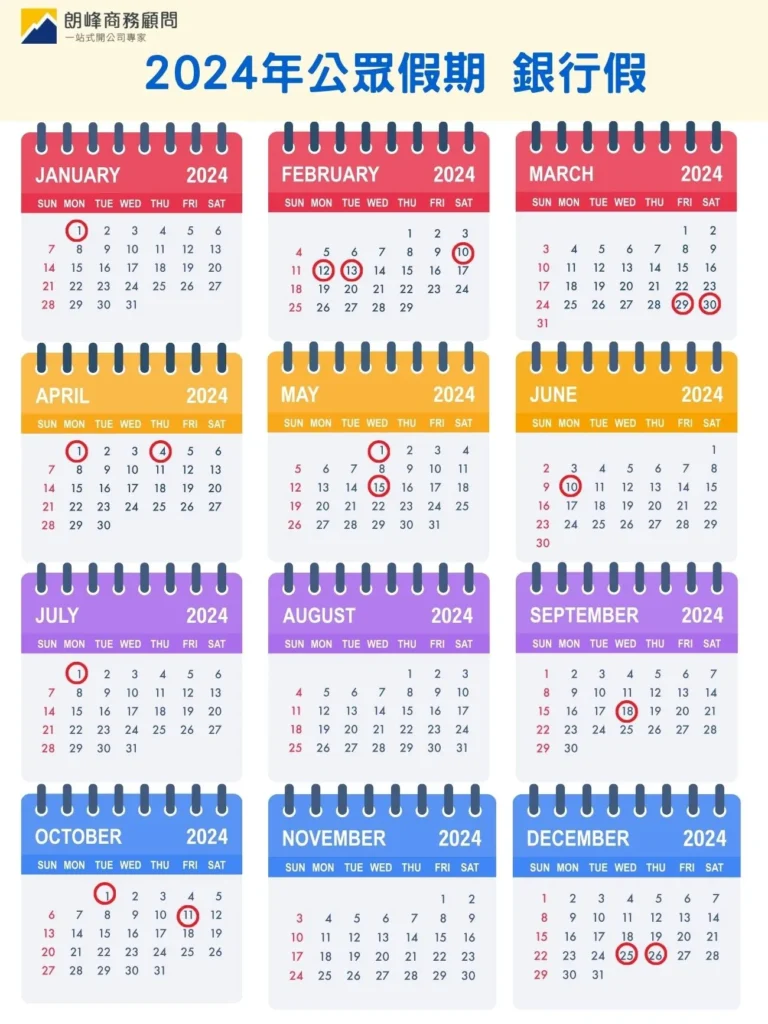
*The second day of Lunar New Year falls on a Sunday, therefore the fourth day of the Lunar New Year has become a statutory holiday.
Statutory Holidays Frequently Asked Questions - Employers
Who are the people to whom statutory holidays apply?
All employees are entitled to 14 statutory holidays regardless of their length of service or whether they are employed under a continuous contract. However, under the Employment Ordinance, an employee is entitled to 14 days of statutory holidays if he/she has been employed under a continuous contract for a period of three months.There is holiday pay, an amount equivalent to the amount paid to an employee before the holiday.12Average daily wage for the month。
Continuous employment
Under the Employment Ordinance, an employee who has been employed by the same employer for a continuous period of four weeks or more and has worked for at least 18 hours in each week is considered to be under a continuous contract.
It is important to note that paid leave is also applicable to part-time employees if they qualify for continuous employment.
Can I ask my staff to work on statutory holidays?
For certain industries, such as the catering industry, many statutory holidays are the days when their business is most prosperous. Employers who require their employees to work on statutory holidays need to make separate arrangements for their employees to take holidays or compensatory time off.
This is known as scheduling an "alternative holiday" to replace a statutory holiday within 60 days before or after the statutory holiday.
Here's what to look for:
- Employers are required to give employees not less than 48 hours' notice on statutory holidays or "other holidays", either in writing, verbally or by posting a notice in a conspicuous place at the workplace.
- "Special Holiday" cannot be used in conjunction withAnother statutory holidayOverlap.
- "Special Holiday" cannot be used in conjunction withAlternative holidaysOverlap. (If both the employer and employee agree, the employer may arrange a substitute holiday for the employee within a period of 30 days before or after a statutory holiday or another holiday)
Can statutory holidays be paid as overtime instead of compensatory time off?
No. Employees must be allowed to take time off in lieu of statutory holidays if they are on duty. Employers are not allowed to make any form of payment in lieu of granting statutory holidays to employees, which is also known as "buying time off" and is liable to a fine of HK$50,000 upon conviction.
Do I need to take compensatory leave for a statutory holiday that is a scheduled rest day for my consultant?
Required, if a statutory holiday falls on an employee's rest day, the holiday should be substituted on the day following the rest day, or a separate holiday should be designated if the day following the rest day is a statutory holiday.
Frequently Asked Questions on Statutory Holidays - Employees
Can employers not pay employees for their rest days?
Whether rest days are paid or not is a matter to be agreed between the employee and the employer. It is stipulated that the employee is entitled to one rest day for every seven days of work. However, it should be noted that employers are not allowed to make it an invalid condition in the employment contract that the employee must work on rest days in order to be entitled to the annual bonus or year-end payment.
Can an employer require an employee to work continuously without taking rest days?
Under the Employment Ordinance, an employee is entitled to not less than one day's leave for every seven days of work, and an employee may not work for 24 hours on a rest day.
However, with the consent of the employee, the employer may designate another rest day in lieu of the original leave. Employers who unreasonably withhold rest days or force employees to work on their rest days are liable to prosecution and a maximum fine of HK$50,000 on conviction.
Conclusion
Whether you are an employer or an employee, it is important to understand the requirements of labour holidays and public holidays, and to combine work and rest so that everyone will be happy! Want to know more about the latest information about doing business in Hong Kong? Enter your email address now to subscribe to our newsletter! Lafont Business helps you to go farther and grow bigger!