



What is the difference between shareholders and directors? Understand responsibilities, legal liabilities, and concurrent position regulations in 5 minutes
Shareholders are the owners of the company, enjoying voting and dividend rights; directors are responsible for daily management and bear heavier legal responsibilities. Both roles can be held by the same person, but the statutory duties of directors are not diminished as a result.
Summary of key points
- Shareholders own the company, directors manage the company, with clear division of labor.
- The legal responsibilities borne by directors are far greater than those of shareholders.
- The same person can simultaneously serve as both a shareholder and a director.
- A private limited company must have at least 1 shareholder and 1 natural person director.
- Non-Hong Kong residents can serve as shareholders or directors, with no nationality restrictions.
What are the respective roles of shareholders and directors?
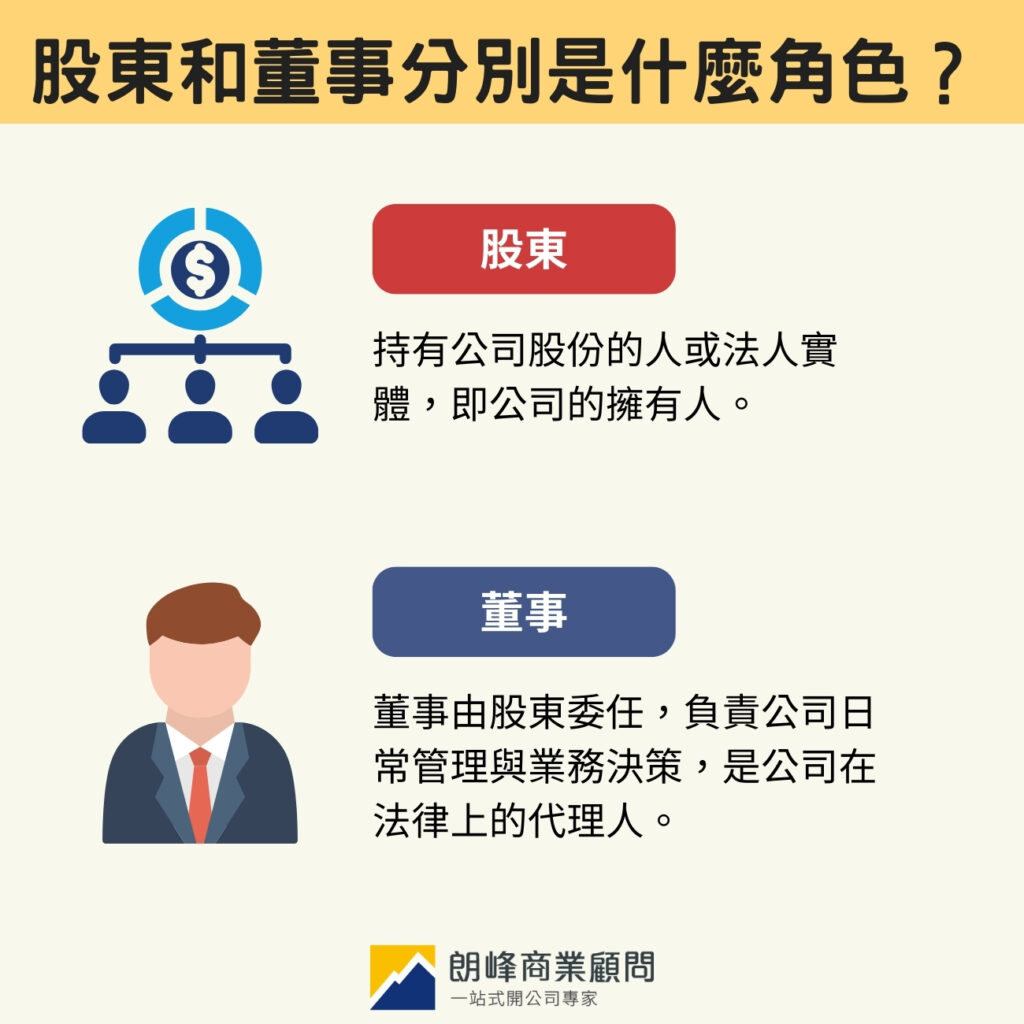
Shareholder: the owner of the company.
A shareholder is a person or legal entity that holds shares in the company, with no restrictions on nationality or residence. According tothe Companies Ordinance (Chapter 622),shareholders acquire corresponding ownership in the company through the subscription of shares, primarily exercising the following rights at the shareholders' meeting:
- Attend and vote.
- Receive dividends.
- Distribute remaining assets proportionally during liquidation.
- Inspect company accounts and records.
Ordinary resolutions require a simple majority to pass; special resolutions (such as amending the company’s articles) require at least 75% of voting rights in support.
The maximum loss for shareholders regarding company debts is limited to the unpaid amount of their subscribed shares.
Director: the manager of the company.
Directors are appointed by shareholders and are responsible for the daily management and business decisions of the company, acting as the legal representatives of the company. According to Section 465 of the Companies Ordinance, directors must possess the necessary skills and a prudent attitude to perform their duties, and must act in the best interests of the company with loyalty.
The daily responsibilities of directors include formulating business strategies, managing operations, ensuring company compliance, maintaining statutory records, and submitting annual return forms, among others. Unlike shareholders, every management decision made by directors must directly bear legal consequences.
What is the difference between the responsibilities of shareholders and directors?
Shareholders decide the direction, directors are responsible for execution.
In a nutshell:Shareholders decide where the company should go, directors are responsible for getting the company there.
| Orientation | Shareholders | board member |
|---|---|---|
| Scope of decision-making | Major matters (amendments to the articles of association, increase or decrease of capital, election of directors) | Daily operations (business, personnel, finance, contracts) |
| Method of exercise | Voting at the shareholders' meeting | Resolutions of the board of directors |
| Level of intervention | Generally do not interfere with daily management | Directly responsible for daily management |
The legal responsibilities of directors are far greater than those of shareholders.
The responsibilities of shareholders are relatively limited, at most losing the invested capital.
Directors are different. According to Sections 465-478 of the Companies Ordinance, directors have a statutory duty to manage the company properly and must prioritize the company's interests above all else, not allowing personal interests to override those of the company. If violated, they may face civil lawsuits or compensation; in severe cases, criminal liability may also be involved. If the company is unable to pay its debts, directors may be held personally liable for improper transactions.
Do the interests of shareholders and directors align?
Not necessarily. Shareholders mostly hope for higher dividends or appreciation of shares; as managers, directors sometimes tend to expand the scale or increase personal salaries, leading to a certain degree of conflict of interest.
It is precisely for this reason that the Companies Ordinance clearly stipulates that directors must act in the overall interest of the company, disclose any conflicts of interest to shareholders, and that salary increases must be approved by the shareholders' meeting.
Can the same person serve as both a shareholder and a director at the same time?
Yes. This is especially common in small and medium-sized private companies.
However, one point to note is that according to Section 474 of the Companies Ordinance,a sole director cannot also serve as the company secretary.Even if you handle both the shareholder and director roles, you still need to appoint another person or a professional entity to serve as the company secretary.
In addition, even if holding both positions, it is advisable to distinguish the roles in daily operations. The shareholder identity corresponds to the rights of the owner, while the director identity corresponds to management responsibilities; the two identities each have their statutory obligations, so conflating them can easily lead to problems.
Extended reading: "TheCan a person open a limited company? Understand the rules for a single shareholder and director to open a company in 3 minutes.》
Regulations on shareholders and directors in Hong Kong
Number of shareholders: at least 1 person, up to 50 persons
According to Section 658 of the Companies Ordinance, a Hong Kong private company must have at least 1 shareholder,and a maximum of 50 persons(excluding company employees). If there are more than 50 persons, it must be converted to a public company, subject to stricter regulatory constraints. Shareholders can be natural persons or legal entities, and non-Hong Kong residents are also allowed, with no nationality restrictions.
Directors must be natural persons, and there must be at least 1
director for a private company. A private company must have at least1 director, and they must be a real individual, not represented by another company. This is a requirement after the amendment of the Companies Ordinance in 2014. A public company must have at leastDirector.
Once a director is appointed or removed, the company must Within 15 days向Companies Registrysubmit a notice (Form ND2A), and the relevant information will be recorded in the register of directors for public inspection.
Can non-Hong Kong residents serve as shareholders or directors?
Yes, there are no restrictions on the nationality or residence of shareholders and directors in Hong Kong. However, if all directors of the company are non-local residents, one must appoint aHong Kong resident or a locally registered companyto act as the company secretary and provide a local office address to ensure the receipt of legal documents. Non-resident directors may also encounter more procedures when opening bank accounts, so it is advisable to check the requirements with various banks in advance.
Frequently Asked Questions
Who has more power, shareholders or directors?
Both have their own responsibilities and are difficult to compare directly. Shareholders, as the owners of the company, hold significant decision-making power (including the appointment and removal of directors); directors, on the other hand, lead daily operations and have greater management authority. Generally speaking, major shareholders have a deeper influence on the long-term direction of the company, but daily operations are entirely determined by the directors.
Can shareholders and directors be replaced later?
Yes. Shareholders can change through the transfer of shares; directors are appointed and removed by the shareholders' meeting through an ordinary resolution (simple majority) without the need to provide reasons, but the director being removed must be notified in advance and given the opportunity to express their views.
Does a director have to be a Hong Kong resident?
No need, Hong Kong has no restrictions on the nationality of directors, and non-Hong Kong residents can serve. If all directors of the company are non-local residents, a local company secretary must be appointed and a Hong Kong office address provided.
Can a shareholder also serve as the company secretary?
It is conditional. If the shareholder is also the sole director, they cannot concurrently serve as the company secretary; if the company has multiple directors, the shareholder can serve as the company secretary.
Unsure how to design the company structure? Let Longfeng Business Consultants assist you.
Understanding the difference between shareholders and directors is just the first step; designing an appropriate company structure based on business needs is the core that affects development. If unsure how to design the structure, one can seek assistance fromLangfeng Business Consultancyprofessional teams like this.
Extended reading: "TheComplete guide to starting a company in Hong Kong: processes, costs, and precautions》