


Table of contents
Filing tax returns for employees is the employer’s statutory responsibility. The BIR56A summary and the individual IR56B remuneration reports must be submitted on time, covering any employee who receives remuneration, to avoid late penalties and legal risk and to ensure tax compliance.
Key takeaways
- The employer’s return (BIR56A + IR56B) is the statutory document in which Hong Kong employers report their employees’ remuneration to the IRD each year.
- It must be returned within 1 month of receipt, and full-time staff, part-time staff and directors must all be included in the return.
- Late submission will lead to a fine and may trigger stricter tax scrutiny in future.
- A company with no employees must still submit BIR56A, declaring “no persons required to be reported” on the form.
What is the employer’s return?
The employer’s return is a mandatory document that Hong Kong employers submit to the Inland Revenue Department each year to report employee remuneration and pension information.
Employer’s returns include BIR56A and IR56B
Every tax season, in addition to profits tax, the company will also receive an “employer’s return” sent by the Inland Revenue Department, which mainly consists of two common forms: BIR56A and IR56B.
- BIR56A: a summary form, which lets the company report in one place which employees are subject to tax filing.
- IR56B: a detailed income report for each employee, including their salary, allowances and so on for that year.
These two forms are a set, and the Inland Revenue Department requires them to be returned together, so remember to submit both!
Employers must file on time
The Inland Revenue Department requires the forms to be completed and returned within 1 month of the date of receipt. You can submit on paper, or submit electronic forms using the [eTAX] one-stop tax payment website.
When will I receive the employer’s return? What if I don’t receive it?
Companies usually receive the return from the Hong Kong Inland Revenue Department in the first week of April each year. The Inland Revenue Department posts documents to the company’s registered address, so as long as the company’s address has not changed, it is generally not missed.
But if you still have not received it by mid-April, you can call the Inland Revenue Department, complete an application form, or log in to eTAX to check directly.
What are the consequences of submitting the employer’s return late?
Under the Inland Revenue Ordinance (Cap. 112), a company that fails to submit the BIR56A and IR56B within the deadline may face a penalty.
What is worse, once a company has a record of late filing, the Inland Revenue Department may scrutinise it more strictly in future, and the tax risk will rise accordingly.
Filing on time is not just about complying with the law; it also avoids unnecessary trouble later.
Does every company need to submit an employer’s return?
Yes! Any company lawfully incorporated in Hong Kong, whatever its size, must submit an employer’s return.
Inland Revenue Ordinance requirements
Under sections 49 and 52 of the Inland Revenue Ordinance, every employer in Hong Kong that has employees is obliged to submit a return on employee remuneration within the time required by the Inland Revenue Department.
All employees (including part-time staff, employees on secondment or assignment, and retired employees)
When completing the IR56B, many people assume that only 'full-time employees' need to be included. In fact, this is not the case. Any employee who received remuneration from the company during the tax year must be included in the return.
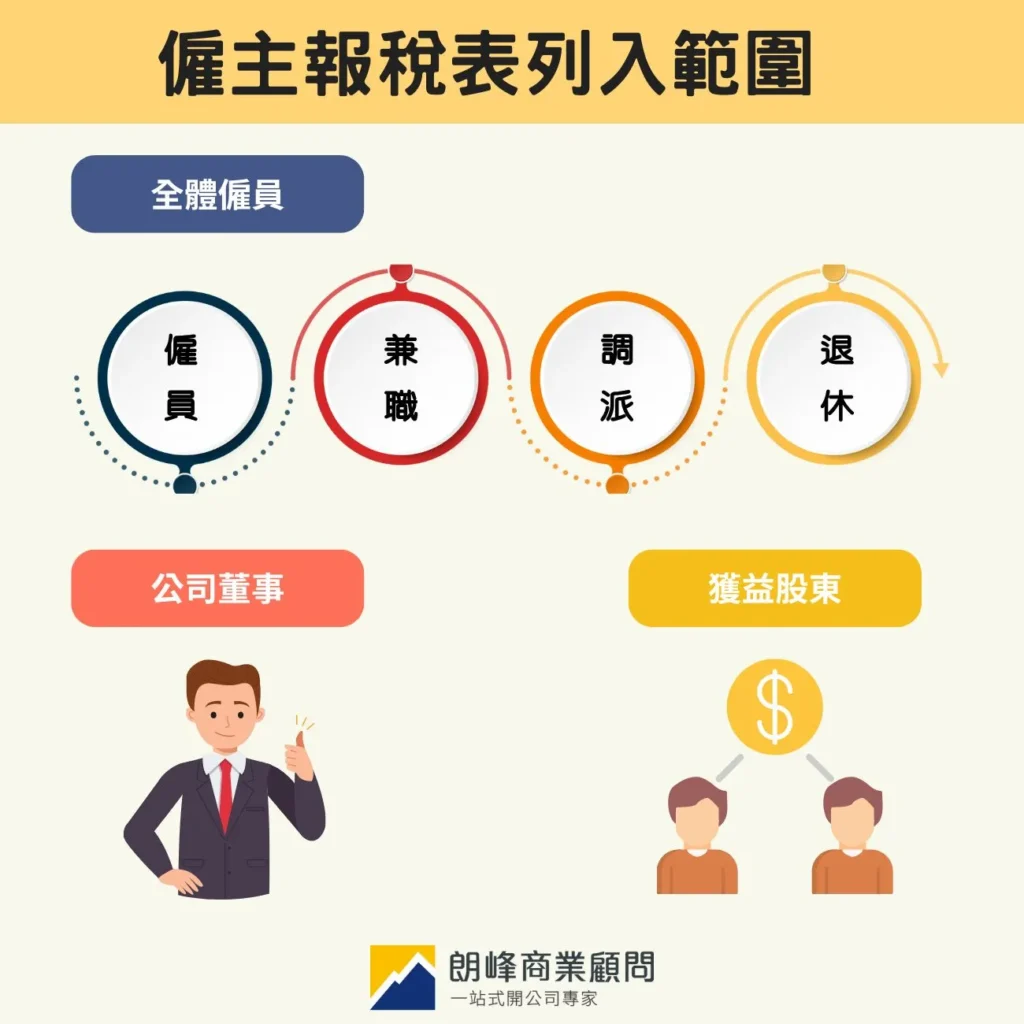
This includes:
- Part-time staff (for example, those who work only 2–3 days a week)
- Employees seconded or assigned from another department or company (even if their main employer is not your company)
- Former employees who have retired but still receive a pension or consultancy fees
The Inland Revenue Department is concerned with whether a person receives remuneration income from your company, not with the nature of their employment contract.
Company directors
Even if a company director has no formal employment contract, if they receive a salary, they are treated as an 'employee' for tax purposes and must still be reported to the IRD. A director's tax obligations on remuneration are the same as those of ordinary employees, so a return cannot be omitted simply because of their position.
Beneficial shareholders
A 'beneficial shareholder' (beneficial owner) is usually a person who is not named as a director or senior officer, but who in fact holds part of the company's shares and takes part in dividend or decision-making. If they receive salary, bonuses, consultancy fees or other remuneration from the company, an IR56B must be filed.
Do companies with no employees still need to file?
If the company employs no staff at all during the tax year, it may in theory inform the IRD that it has no employees, but this response must also be formally submitted on the BIR56A form.
In other words, even if an IR56B is not required, the BIR56A must still be returned, with 'No persons to report' noted on the form.
Know before you file: an overview of employer tax obligations
Tax obligations cover employees who are in post, leaving, or leaving Hong Kong. The forms to be submitted in each situation are as follows:
|
Form |
Purpose |
Submission deadline |
Sample form |
|
BIR56A / IR56B |
Annual remuneration return |
1 month after issue |
BIR56A / IR56B |
|
IR56E |
New employee notification |
Within 3 months of starting work |
IR56E |
|
IR56F |
Notification of employee about to leave |
1 month before the employee leaves |
IR56F |
|
IR56G |
Notification of employee leaving Hong Kong (salary withholding required) |
1 month before leaving Hong Kong |
IR56G |
|
IR6036A / IR56M |
Return for outsourced workers / commission payments |
Submitted together with BIR56A |
IR6036B / IR56M |
What is the difference between IR56B and BIR56A? You must submit both!
IR56B vs. BIR56A
IR56B and BIR56A often appear together but serve different functions. The IR56B reports the remuneration details of each employee individually, while the BIR56A reports remuneration for all employees and is the summary form that consolidates the company’s employees who have tax-filing obligations.
Put simply, one IR56B reports one person and one BIR56A reports the whole company, so both must be submitted.
How to complete IR56B
The IR56B is an individual form completed for each employee, used to report that year's income, including salary, allowances and bonuses. It is usually filed once a year, but may also be submitted separately when an employee leaves the company or leaves Hong Kong.
Documents needed for IR56B
Before filling in the form, prepare the employee’s basic details:
- Employee details
- Marital status and spouse details
- Position held
- Period of employment
- Total salary
- Other details
- Housing benefit details
Guide to completing IR56B

Make sure every field is completed accurately, especially the remuneration period, total income and holiday pay, so that the figures do not differ from the company's internal payroll records.
The Inland Revenue Department also provides a completed IR56B sample for reference.
Who can sign the IR56B form?
The IR56B form is usually signed and submitted by the company’s owner, or by an authorised finance or human resources department.
How to complete BIR56A
The BIR56A is usually issued by the Inland Revenue Department on its own initiative. If you have not received it, you can apply using “Request for the employer’s return of remuneration and pensions”, or call the Inland Revenue Department to enquire, or log in to eTAX to check directly.
Information needed for BIR56A
- Company address and contact details
- Number of employees (total number of employees for whom an IR56B must be filed)
- Signatory’s name, position and date
- List of attached IR56B forms
Guide to completing BIR56A

Check that every employee with income has been listed on an IR56B form, then sign the BIR56A and submit it together with the IR56B forms.
The Inland Revenue Department also provides a completed BIR56A sample for reference.
What should a company watch out for when filing tax returns for employees?
Common mistakes
Even experienced HR staff or employers can trip up when handling tax returns. Many people wrongly assume that the following 7 situations do not need to be reported:
- The company has no employees
- The company has no actual operations
- The company has recorded a loss
- The company is going through closure procedures
- Remuneration paid to persons other than employees
- Being paid as a director, assuming director’s fees are not employee remuneration
- The employee is part-time
In fact, all of the situations above still require tax to be reported. These errors may seem minor, but if they recur year after year, the IRD will consider the company's systems non-compliant, which may affect future tax reviews.
Points to note
- The BIR56A must be completed and returned within one month of issue
- Employee payroll payment records must be kept for at least 7 years
- Before submission, check personal details and total remuneration with the employee
- Keep 2 copies of each IR56B form (one as the company’s supporting record for employee tax filing expenses, and the other given to the employee for their records and personal tax filing).
- Even if an employee has left the company, you must still file their tax return and mail a copy of the IR56B form to their address
What happens if the company does not file tax returns for its employees? Both employer and employee are affected!
Employer
When a company does not file tax returns for its employees, there are two scenarios: if the Inland Revenue Department judges that it was an oversight, a fixed penalty may be imposed; but if the Inland Revenue Department judges that the omission was deliberate, it may involve criminal liability.
employees’
If a company does not file a return for an employee, the IRD may have no way of knowing that the person has income. If the employee also fails to file on their own, neither party has submitted the information. If this is discovered later, it may be treated as 'tax evasion'!
The employee will need to file a late return, pay the outstanding tax and pay a penalty. It may also affect future loan, immigration and credit records.
How do you submit the employer’s return? 3 ways explained!
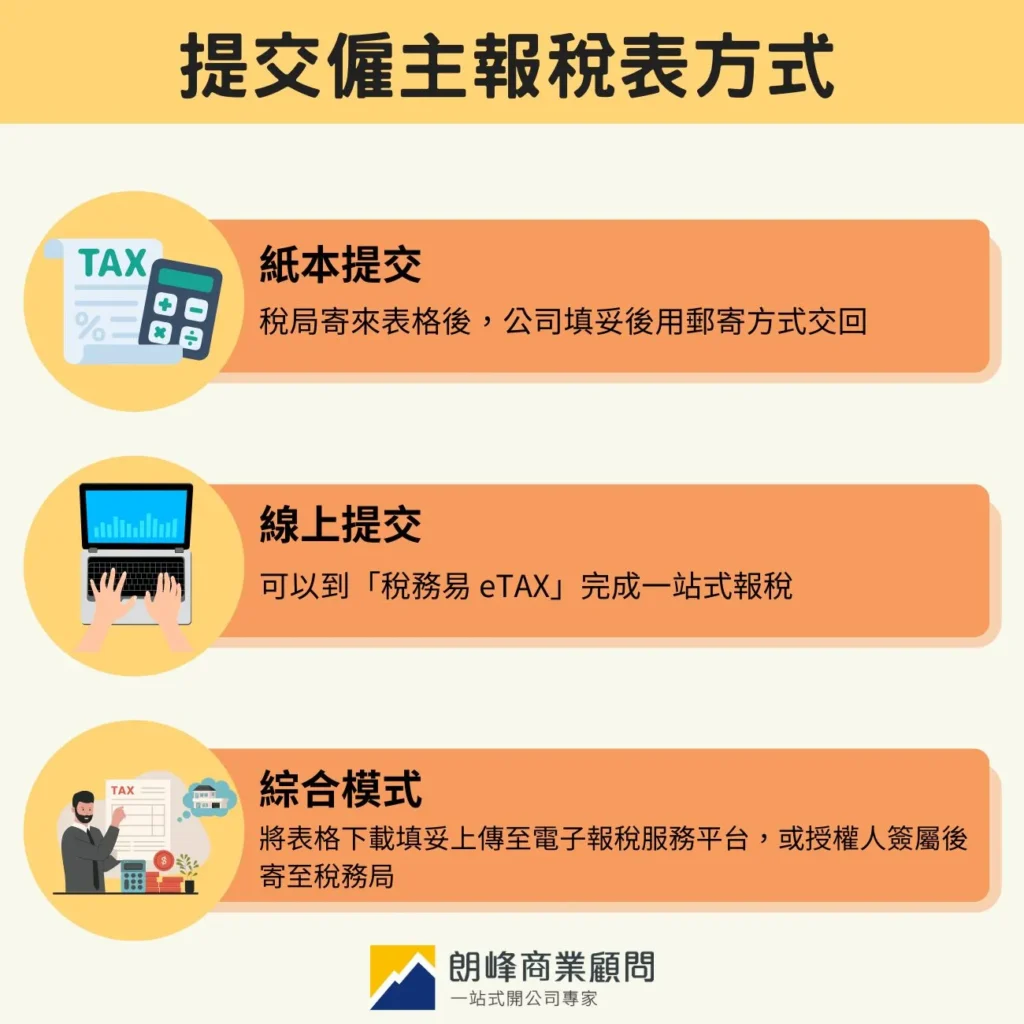
Paper submission
This is the most traditional method. After the IRD sends the forms, the company completes them and returns them by post. If your company is small, has few staff and does not use an electronic system, paper submission is the simplest and most direct option.
However, allow sufficient time for postage, as late submissions are penalised all the same.
Online submission
You can complete and upload the form online through eTAX. This saves printing, signing and posting, and you receive confirmation of submission immediately. Suitable for most small and medium-sized enterprises.
Integrated mode
Employers do not need to use an authorised signatory’s eTAX or iAM Smart+ account. They can designate any employee or agent to generate a data file using the following tools:
- IR56B Form Preparation Tool: free software provided by the Inland Revenue Department, suitable for completing the employer’s return.
- Customised software approved by the Inland Revenue Department: programs designed by the employer and recognised by the Inland Revenue Department.
After that, upload the data file to the employer’s e-filing service platform. The system will generate a one-page text verification list (cover page), which the responsible person or agent signs by hand and posts to the Inland Revenue Department to complete the filing.
Employer’s return FAQs
How long must records be kept?
Under the Inland Revenue Ordinance, a company must keep records relating to tax filing for at least 7 years, including payroll records, copies of tax returns and payment vouchers.
Can the submission of the employer’s return be extended?
Yes! But you must apply to the Inland Revenue Department for an extension, giving your reasons, before the deadline. If you do not apply and submit late, it will be treated as a breach and you will be fined.
Can I amend the information if I find a mistake after submission?
Yes! If you find an error, you should promptly submit a correction form to the Inland Revenue Department (for example, a revised IR56B). You must not simply make a casual verbal amendment or send a letter of explanation.
Do payments to outsourced workers also need to be reported in the employer’s return?
Yes! If, in any year of assessment, the company has paid remuneration to non-employees, such as freelancers / self-employed persons or outsourced contractors, a separate return called IR56M must be submitted.
This form is used to report to the Inland Revenue Department the commissions, consultancy fees, one-off payments and similar income paid by the company to non-employees. It differs from the IR56B used for ordinary employees.
In principle, anyone who has no formal employment relationship with the company but provides services and receives payment falls within the scope of IR56M reporting.
Can only the company’s owner sign the employer’s return?
Not necessarily. An authorised accountant or administrative manager may also sign the return, but you must make sure the signatory has a real understanding of the contents and has been properly authorised.
Professional tax filing services in Hong Kong: SetupHK
Filing tax for employees may look like simply submitting a form, but in practice it involves details such as classifying each person's status, matching the correct forms and managing deadlines. For many small and medium-sized businesses, a single incorrect IR56B, or forgetting to submit an IR56M, may attract scrutiny from the IRD or even a penalty!
SetupHK provides professional tax filing services in Hong Kong. We are familiar with company tax filing procedures and can help with employer’s returns, tax filing for the self-employed and other tax matters. Whether you have just started a business or need a systematic tax filing process, you can contact SetupHK for reliable, time-saving tax filing support from professional accountants.
Book a free consultation|Learn about SetupHK’s tax filing services
Further reading:
Complete guide to Hong Kong company profits tax: rates, calculation and filing process
Audit services for Hong Kong companies
IRD Kai Tak address, MTR exits and office hours
Last updated: May 2026 | Information is subject to official IRD announcements